
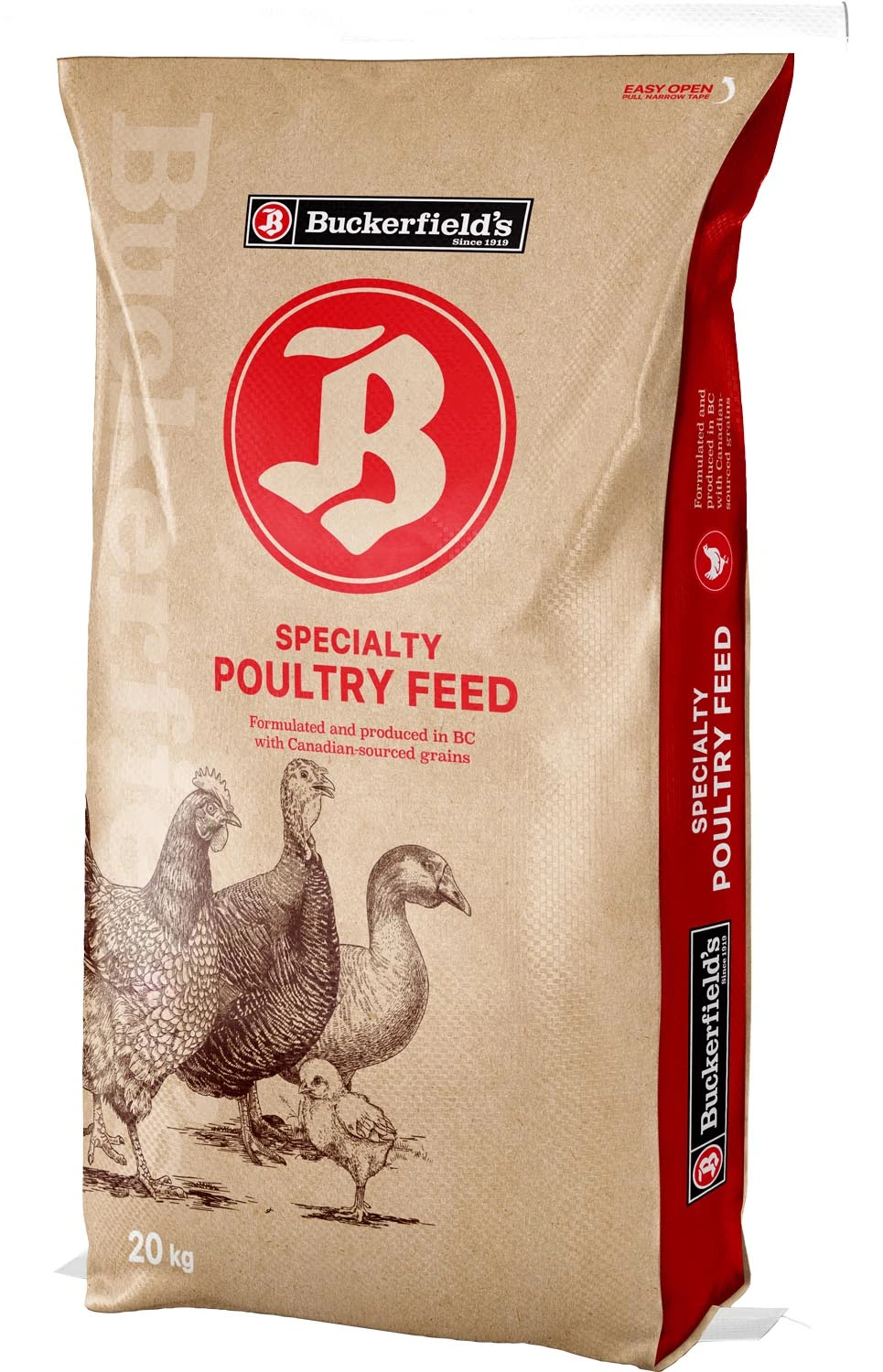
Buckerfield's 20% Chick Starter
20 kg
High-protein crumble for chicks 0–8 weeks. BC milled.
$132.49 CAD
Learn how to raise urban chickens from day-old chicks to laying hens — brooder setup, coop sizing, feed stages, and breed picks for Canadian backyard flocks.
Avg. Canadian grocery egg price
Eggs that cost $10 a dozen at the grocery store have a way of making a small backyard flock look like a very reasonable idea. Backyard chicken keeping has been growing steadily across North America for years, and the wave hasn't peaked. If you've been thinking about it — wondering whether your lot is big enough, whether the neighbours will complain, whether it's actually worth the setup — this guide gives you the straight story.
We'll cover everything from your first brooder lamp to your first omelette: how to set up a brooder, which breeds work best in an urban setting, how to size and build a coop, how to feed a flock through each life stage, and what to expect from a Canadian winter. By the end, you'll know whether this is the right project for your household and exactly how to get started if it is.
TL;DR: Backyard chicken keeping is growing fast — at least 13 million U.S. households kept backyard flocks in 2025, and Canadian interest has followed the same trend. A starter flock of 3–4 laying hens costs roughly $300–$500 to set up and produces 250–300 eggs per hen annually. This guide walks you through every step, from brooder to first egg.
Average U.S. egg prices rose from $2.51 per dozen in December 2023 to $10 per dozen by March 2025, according to USDA data via Axios. Canadian grocery shelves followed a nearly identical curve. That kind of price shock gets people thinking about alternatives — and for many, a small backyard flock is the most practical one available.
The numbers back this up. At least 13 million U.S. households kept backyard chickens in 2025, up from roughly 10 million in 2018 (Cooped Up Life, 2025). Backyard feed sales doubled between October 2024 and early 2025 as avian flu disrupted commercial egg supply (San.com, 2025). It's not a fringe hobby anymore. It's a mainstream response to real food costs.
What's interesting about the Canadian context is that this isn't just a cost story. A peer-reviewed survey of 279 Ontario backyard chicken owners found that 94% cited eggs as their primary reason for keeping chickens — but 62.4% also kept them as a hobby and 49.6% considered them pets (PMC, 2022). The practical and the personal overlap more than you'd expect. People start for the eggs and stay for the chickens.
A peer-reviewed survey of Ontario backyard chicken owners (n=279) found that 94% kept chickens primarily for eggs, while 62.4% also treated it as a hobby and 49.6% considered their birds pets (PMC, 2022). Eggs are the draw, but the relationship with the flock keeps people committed long-term.
Getting the foundation right saves a lot of grief later. The three things you need sorted before you purchase birds are bylaws, space, and flock size. Skip any of these and you'll hit a wall quickly.
Bylaws first. Most BC municipalities permit backyard hens — Abbotsford included — but the rules vary. Permit requirements, coop setback distances, and flock size limits differ by city. Before you buy anything, check your local zoning. We've written a city-by-city bylaw breakdown for Canada that covers most major municipalities, including Metro Vancouver cities and Fraser Valley communities.
Space math. The commonly accepted minimum is 3–4 square feet per hen inside the coop and 10 square feet per hen in the outdoor run (Poultry Extension / USDA). For a starter flock of 4 hens, that means a coop of at least 12–16 sq ft of floor space and a run of at least 40 sq ft. Tighter than that and you'll see stress behaviours, pecking, and higher disease risk.
Start with 3–4 hens. This is the right size for a first flock. It's enough to get meaningful egg production — potentially 15–20 eggs per week at peak — without overwhelming you on chores or feed costs. Chickens are social; you don't want to keep fewer than three.
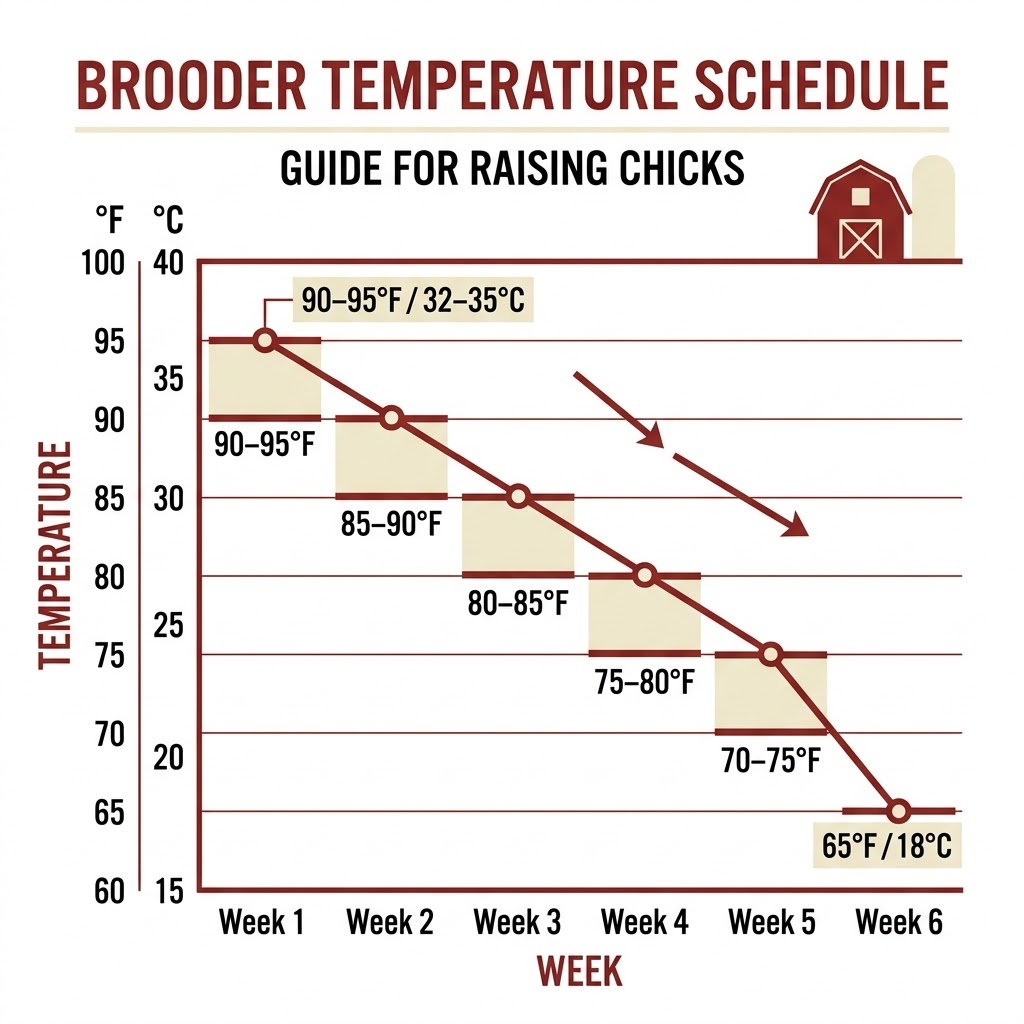
Day-old chicks can't regulate their own body temperature, so the brooder is what keeps them alive for the first six weeks. It's a simple setup — a heat source, a container, feed, and water — but the temperature schedule matters. According to UNH Cooperative Extension, chicks need 90–95°F (32–35°C) in week one, dropping by 5°F each week until they reach approximately 65°F (18°C) by week six.

For heat, a red bulb in a clamp fixture is the standard setup. The red light reduces pecking behaviour compared to white or clear bulbs — a small but meaningful detail when you're raising chicks in close quarters. The Satco Heat Lamp 250W Red paired with the Brooder Clamp Light 300W is a reliable combination. Keep a thermometer at chick level, not at the top of the brooder. The temperature at the floor is what matters.
Watch the chicks to calibrate. If they're piled under the lamp, they're cold. If they're pressed against the walls away from the lamp, they're too hot. Comfortable chicks move freely around the brooder and sleep in a relaxed spread.
Feed for weeks 0–8. Chicks need a high-protein starter crumble — typically 20% protein — to support rapid early growth. Both Buckerfield's 20% Chick Starter and Chatterbox 20% Starter B Crumble are solid options available locally. Chatterbox is BC-milled, which means shorter supply chains and fresher product. Keep crumble available at all times for the first eight weeks.
UNH Cooperative Extension recommends a brooder temperature of 90–95°F (32–35°C) in week one, reduced by 5°F per week until chicks reach approximately 65°F (18°C) at week six. Failing to follow this schedule — particularly keeping temperatures too high as chicks feather out — is a leading cause of early flock stress and slow development.
If you want one book that covers every question you'll have in the next two years — breeds, feed, health, housing, egg production, and winter management — Storey's Guide to Raising Chickens by Gail Damerow is it. Now in its 4th edition (424 pages), it's been the go-to reference for backyard and small-scale poultry keepers for nearly 30 years. Worth having on the shelf before your chicks arrive.
Breed choice matters more in an urban setting than on a farm. You want hens that are calm, quiet, productive, and forgiving of the closer quarters that come with a suburban lot. Here are five breeds that consistently perform well for urban keepers in BC.
Rhode Island Red. The most productive dual-purpose breed available. Expect 250–300 brown eggs per year in year one, calm enough temperament for backyard keeping, and good cold hardiness. They can get assertive in a mixed flock — keep that in mind if you're mixing breeds.
Plymouth Rock (Barred Rock). Steady layers of 200–250 brown eggs per year, genuinely docile, and one of the easiest breeds for first-time owners. They handle BC winters well and rarely cause flock drama. A good anchor bird for a mixed urban flock.
Sussex. Friendly, curious, and reliably productive — around 200–250 eggs per year. Speckled Sussex in particular are striking birds and tend to be tolerant of handling, which matters if you have kids or want hens that don't flee every time you enter the run.
Buff Orpington. In our experience with customers who are new to chickens, Orpingtons produce the fewest complaints. They're large, calm, don't mind being picked up, and lay a reliable 175–200 eggs per year. Production isn't the highest on this list, but for temperament in a neighbourhood setting, they're hard to beat.
Easter Egger. Not a true breed, but a cross that lays blue or green eggs and provides reliable production of 200–250 eggs per year. Popular with families for obvious reasons. Temperament is generally good. If you want a bit of novelty in the egg basket, add one or two.
Space requirements for laying hens are 3–4 sq ft per bird inside the coop and 10 sq ft per bird in the run, per Poultry Extension and USDA recommendations. For a four-hen urban flock, that translates to a minimum coop footprint of 16 sq ft and a run of 40 sq ft. These are minimums — more is always better, particularly for the run.

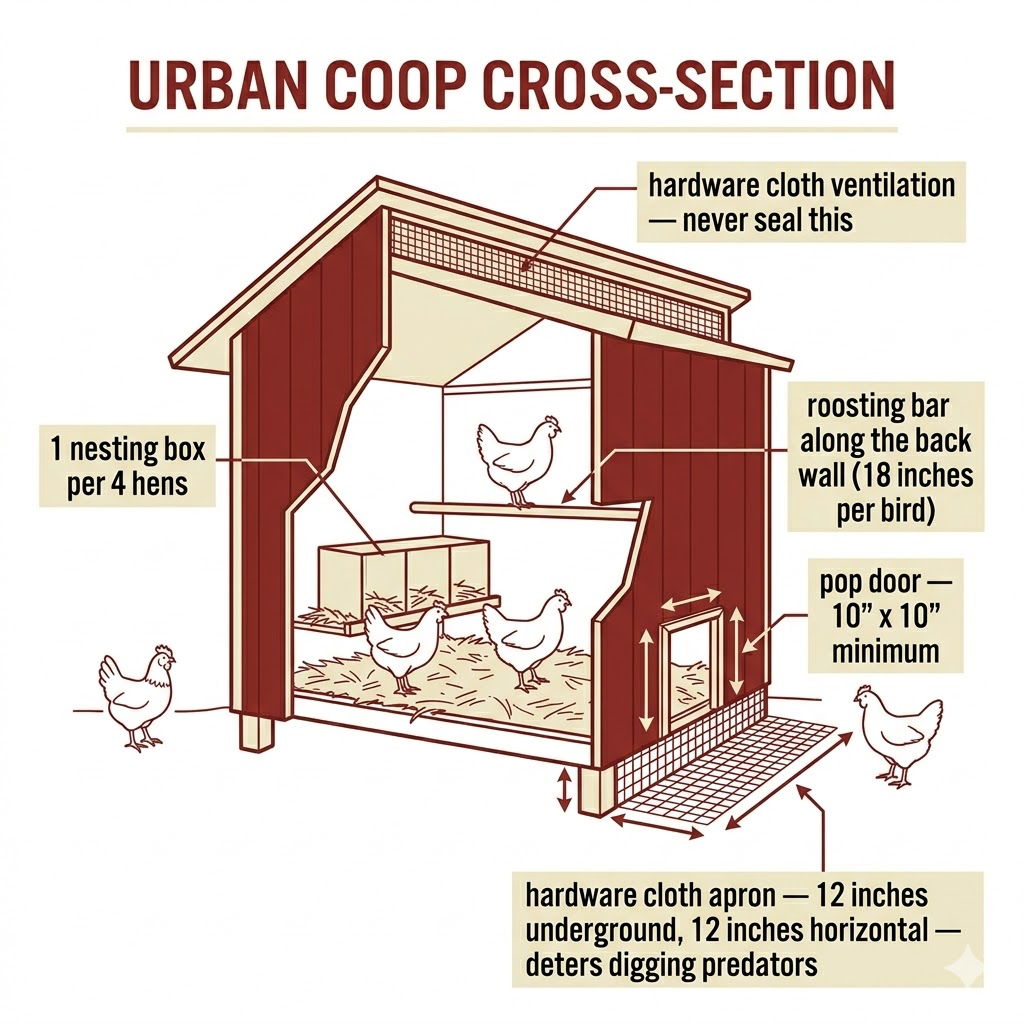
Nesting boxes. One box per four hens is the accepted standard. More than that and hens will pick a favourite anyway. Line them with straw and place them lower than the roosting bars or hens will sleep in them and foul the nesting material.
Roosting bars. Allow 18 inches of bar length per bird. Hens will crowd together in cold weather, but the bar length still needs to accommodate a full spread. Flat 2x4 boards laid flat-side-up are better than round dowels — hens can cover their feet with their feathers and stay warmer in winter.
Ventilation. This is the most commonly underestimated factor in urban coop builds. Poor ventilation causes respiratory disease, frostbite from moisture buildup, and ammonia accumulation. A hardware cloth gap at the roofline — screened but never sealed — provides the passive airflow a healthy coop needs year-round. Don't plug it in winter. Cold and dry is safer than warm and damp.
Predator-proofing. Urban environments have raccoons, rats, crows, and the occasional hawk. Hardware cloth (not chicken wire — chicken wire has large enough gaps for a raccoon paw) on all openings, a buried apron of mesh around the base of the run, and a solid latch on the coop door are non-negotiable.
The Ghost Controls Auto Coop Door is worth serious consideration. It's a light-sensing automatic opener that lets birds out at sunrise and locks them in at dusk. That last part matters — most urban flock losses happen because someone forgot to close the coop at night.
USDA and Poultry Extension guidelines recommend a minimum of 3–4 sq ft of coop floor space and 10 sq ft of outdoor run space per laying hen. Crowding below these thresholds increases stress, feather pecking, and disease transmission — problems that are significantly harder to fix once established than to prevent with adequate space from the start.
A laying hen consumes approximately 100–150 grams of feed per day, according to University of Missouri Extension. That's roughly a pound of feed every three to four days, per bird. For a four-hen flock, plan on 5–6 kg of feed per week at full production. Feed is your biggest ongoing cost, so it's worth getting the stages right.

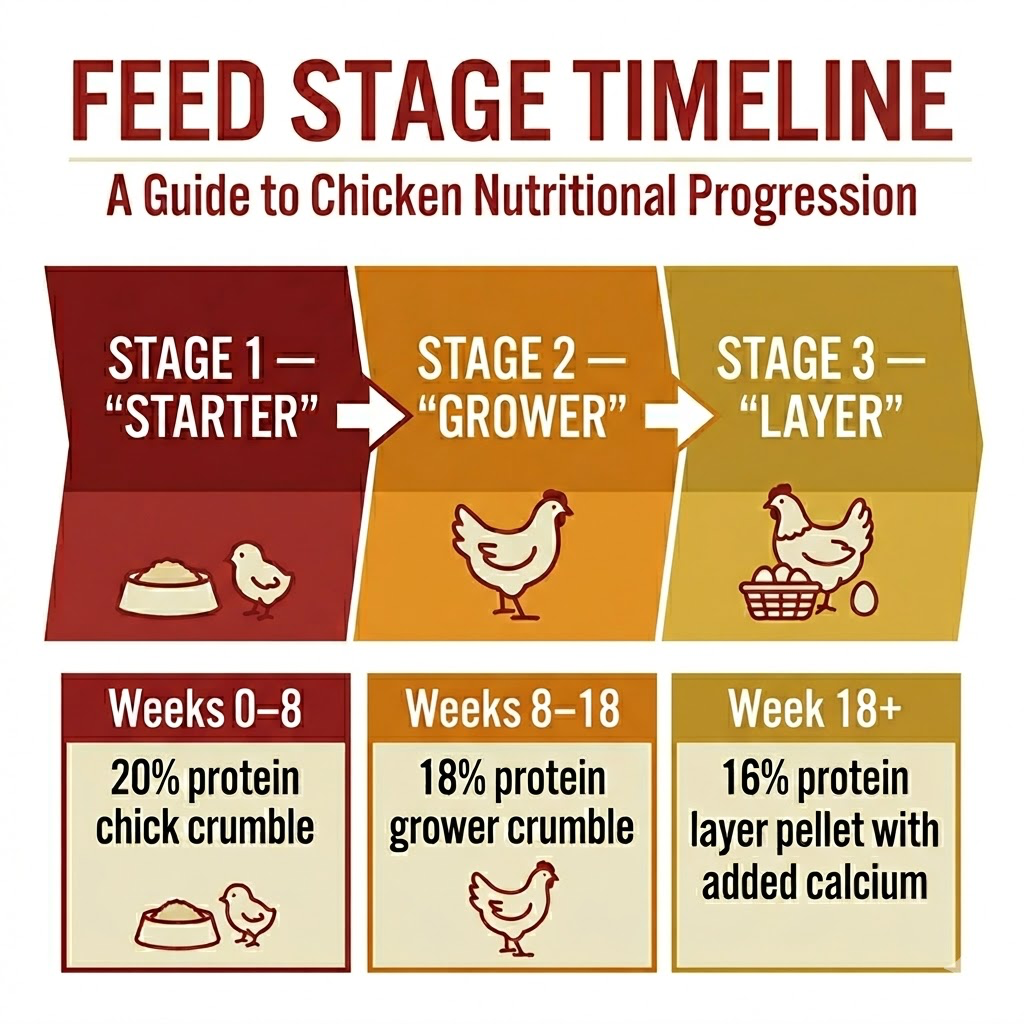
Stage 1 — Starter (weeks 0–8). As covered in the brooder section, 20% protein crumble is the right feed here. Buckerfield's 20% Chick Starter and Chatterbox 20% Starter B Crumble both fit the bill.
Stage 2 — Grower (weeks 8–18). Once chicks are feathered and moved out of the brooder, they transition to a grower feed. Protein drops slightly to 18% to support continued muscle and bone development without pushing premature laying. Buckerfield's 18% Poultry Grower Crumble covers this window.
Stage 3 — Layer (week 18+). When pullets start laying — or just before — switch to a layer pellet with added calcium. Calcium is what makes strong eggshells. Without it, hens will pull calcium from their own bones. Buckerfield's 16% Layer Pellet is a well-balanced option; Chatterbox 18% Layer Pellet is a higher-protein alternative suited for high-production breeds.
Scratch and treats. Scratch — cracked corn and grain — is a treat, not a feed. It's low in protein and will dilute your flock's nutrition if it makes up more than 10% of their diet. Use it for enrichment and to build rapport with your birds, not as a staple. Buckerfield's Hen Scratch and Nature's Grub Happy Flock are both good for this purpose.
Dust bathing. Hens need to dust bathe to control external parasites — mites and lice. Provide a container of dry loose material they can roll in. Fresh Coop Dust Bath 2.7kg is a preblended mix that works well and stores cleanly. Without a dust bath option, you'll see mite problems. With one, you rarely will.
For feeders, the Little Giant 12 lb Galvanized Hanging Poultry Feeder reduces waste and keeps feed off the ground, which matters for rodent control.
University of Missouri Extension estimates that a laying hen consumes approximately 100–150 grams of feed per day. For a four-hen backyard flock, that's roughly 400–600 grams daily — around 3–4 kg per week. Feed costs scale predictably, making it straightforward to budget for before you start.
Hens need continuous access to clean water. A typical laying hen drinks 500 ml or more per day — more in summer and less in winter, but never zero. Dirty water is a disease vector. Algae, bacteria, and drowned insects all accumulate in open-trough waterers faster than most owners expect.
The Little Giant 3 Gallon Poultry Fountain is the classic gravity-fed option and it works. If you want cleaner water with less maintenance, the Little Giant Deluxe Hen Hydrator 3 Gallon uses nipple-style dispensers that hens tap to drink — no open surface for contamination to accumulate.
Canadian winters deserve a specific mention. A standard plastic waterer will freeze solid in a BC winter night, and hens that can't drink for even a few hours will stop laying. The Farm Innovators 3 Gallon Heated Poultry Waterer is the straightforward answer. It keeps water above freezing in temperatures down to well below zero. If you're in Abbotsford or anywhere in the Fraser Valley, a heated waterer isn't optional equipment — it's a winter necessity.
One thing that surprises new chicken owners: hens don't stop laying through a mild BC winter the way they do in colder climates. Day length is the trigger, not temperature. A few hours of supplemental coop lighting in January can maintain production through the short days. But without water access, production stops immediately regardless of light.
Most hens begin laying at 18–24 weeks of age, and production breeds like Leghorns or Sex-Links may start as early as 16–18 weeks (Purina Animal Nutrition). The dual-purpose heritage breeds recommended above — Rhode Island Reds, Plymouth Rocks, Orpingtons — typically fall in the 20–24 week range.
A productive laying hen produces 250–300 eggs per year in her first year, then production typically declines 10–15% per year after that (Purina Animal Nutrition). A hen is a productive layer for roughly 2–3 years. What you do with older hens is a decision each keeper makes for themselves.
The nutritional case for backyard eggs is real but should be cited carefully. A study commissioned by Mother Earth News found that pasture-raised backyard eggs may contain up to 25% more vitamin E and 75% more beta carotene than conventional eggs (Mother Earth News, 2007). This is older data and it's a single commissioned test, not a clinical trial — but the directional finding aligns with what you'd expect from hens on a varied diet with outdoor access.
The return on investment takes time. Figure roughly $300–$500 in setup costs (brooder, coop, feeders, waterers, first bag of feed), then $30–$50 per month in ongoing feed for a four-hen flock. At peak production, four hens can produce 20–24 eggs per week. The math eventually works out — especially at current grocery prices.
Purina Animal Nutrition reports that a productive laying hen produces 250–300 eggs per year in her first year of lay. Most hens begin laying between 18–24 weeks of age, with production breeds occasionally starting as early as 16 weeks. Production typically declines by 10–15% annually after year one.
Three to four hens is the right starting point. At peak production, a single hen lays roughly 5–6 eggs per week in her first year — a productive laying hen produces 250–300 eggs annually (Purina Animal Nutrition). Four hens give you roughly 20 eggs per week, which covers a typical family without creating a surplus you don't know what to do with.
No. Hens lay eggs regardless of whether a rooster is present. Fertilized eggs require a rooster, but unfertilized eggs are nutritionally identical and are what you want for eating. Most urban bylaws prohibit roosters anyway — they're noisy and unnecessary for a backyard laying flock.
A laying hen eats roughly 100–150 grams of feed per day (University of Missouri Extension). For four hens, that's approximately 400–600 grams daily, or 12–18 kg per month. At current feed prices for a quality layer pellet, budget $30–$50 per month for a four-hen flock. Feed costs are predictable and don't fluctuate much.
Possibly, but the evidence is limited. One commissioned test found backyard eggs may contain up to 25% more vitamin E and 75% more beta carotene than conventional eggs (Mother Earth News, 2007). That data is nearly two decades old and not from a clinical trial. What's clear is that hens with outdoor access and a varied diet produce eggs with deep orange yolks — a visible signal of a diet richer in carotenoids.
Raising backyard chickens isn't complicated, but it rewards preparation. Get your bylaws sorted first — our city-by-city bylaw breakdown covers most Canadian municipalities, including Abbotsford and the Fraser Valley. Size your coop before you buy your birds, not after. Start with 3–4 heritage breed pullets from a reputable hatchery, set up your brooder correctly for the first six weeks, and transition feed on schedule.
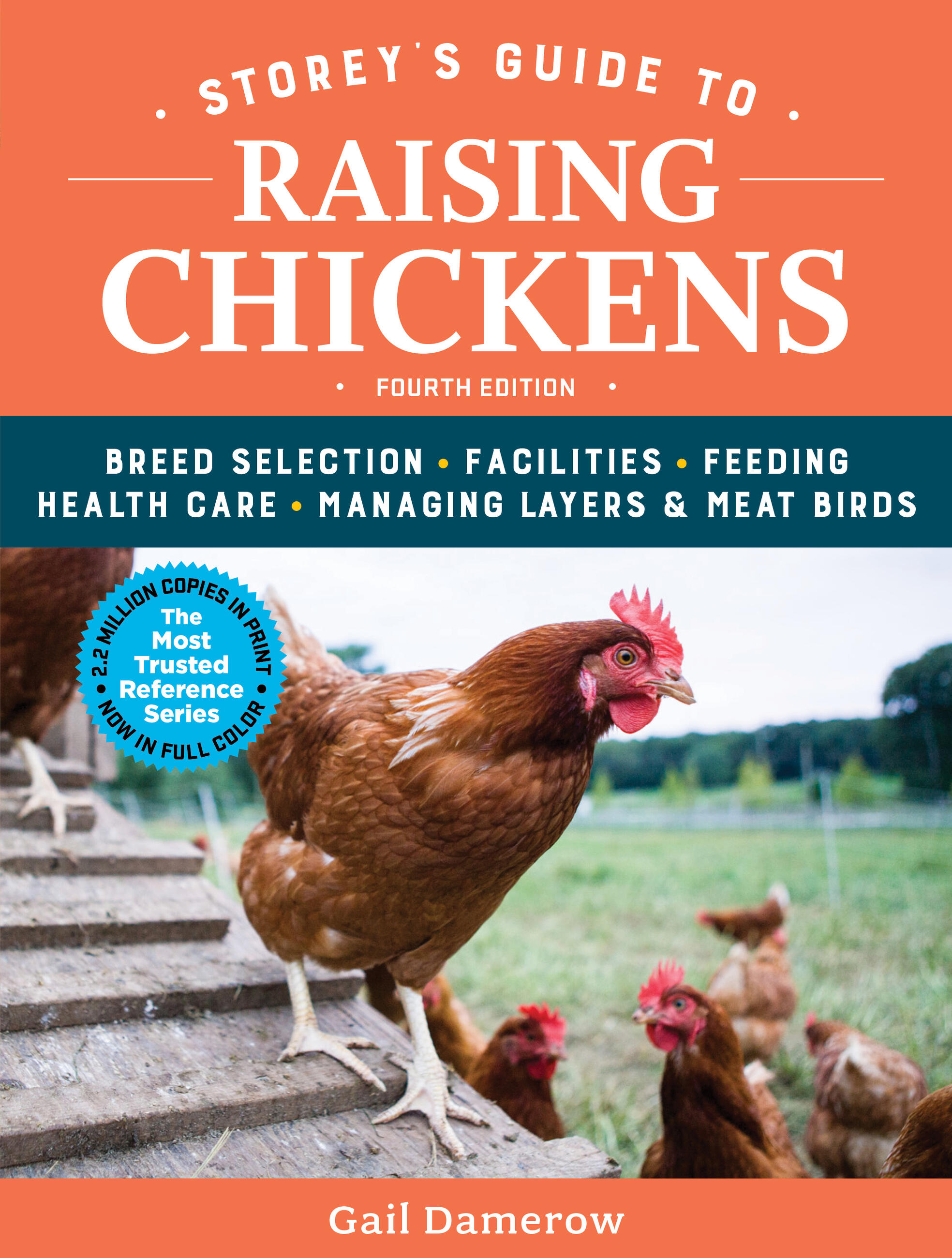
Recommended Reading
Storey's Guide to Raising Chickens, 4th Edition — Gail Damerow
The definitive reference for backyard and small-scale poultry keeping. 424 pages covering breed selection, coop design, feeding stages, health care, egg production, and winter management. If you only buy one chicken book, this is it. Available at Balkan Farms & Market — $30.99
The egg prices that sparked your interest aren't going back down. But more than the cost savings, most people who keep a small backyard flock find that the daily routine — feeding, watering, checking in on the birds — is genuinely satisfying. The eggs are the practical justification. The flock becomes something else.
Balkan Farms & Market is a feed and farm supply store in Abbotsford, BC, serving the Fraser Valley since 2021.
20 kg
High-protein crumble for chicks 0–8 weeks. BC milled.
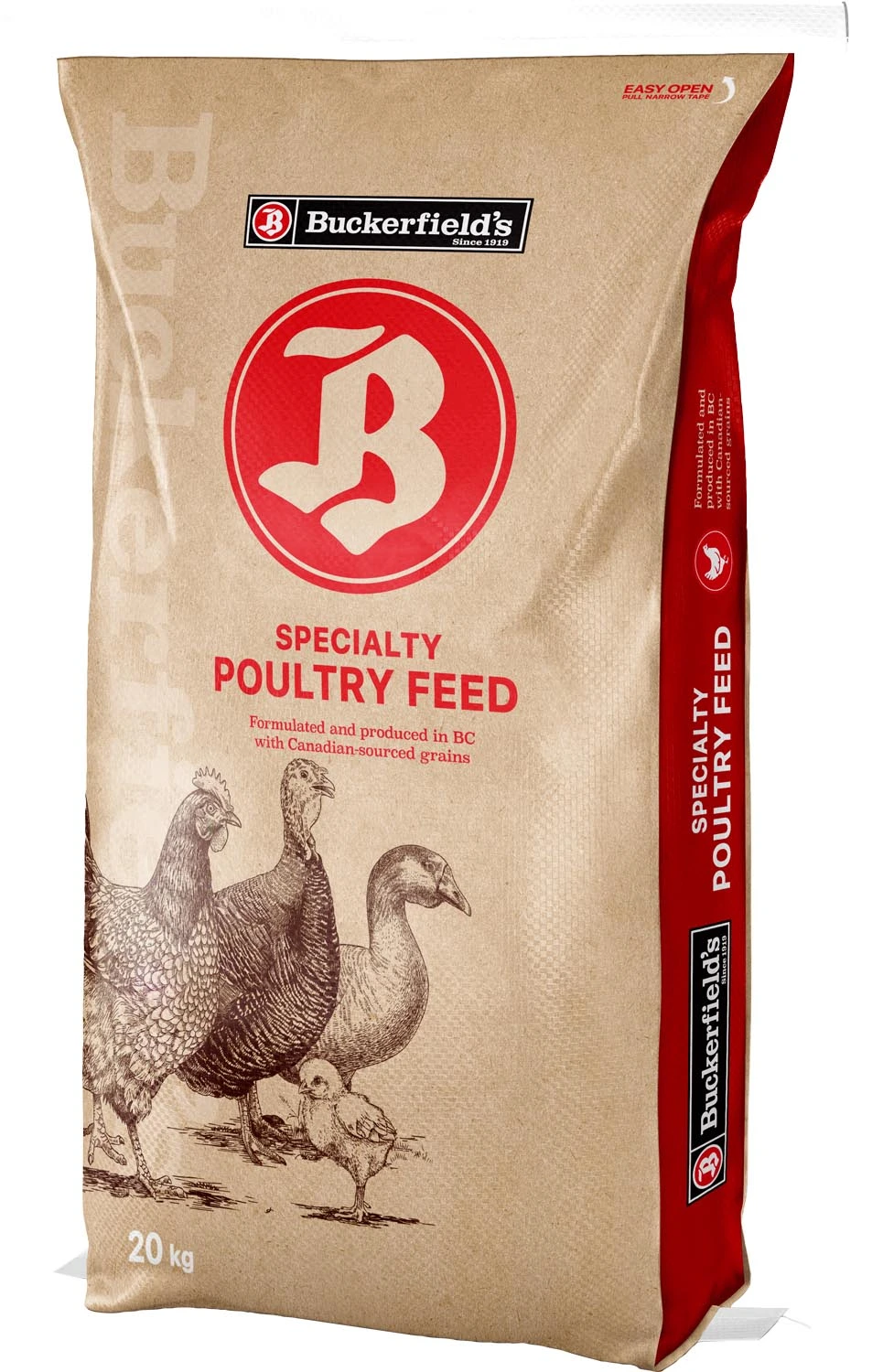
20 kg
Balanced layer pellet with added calcium for strong shells. BC milled.
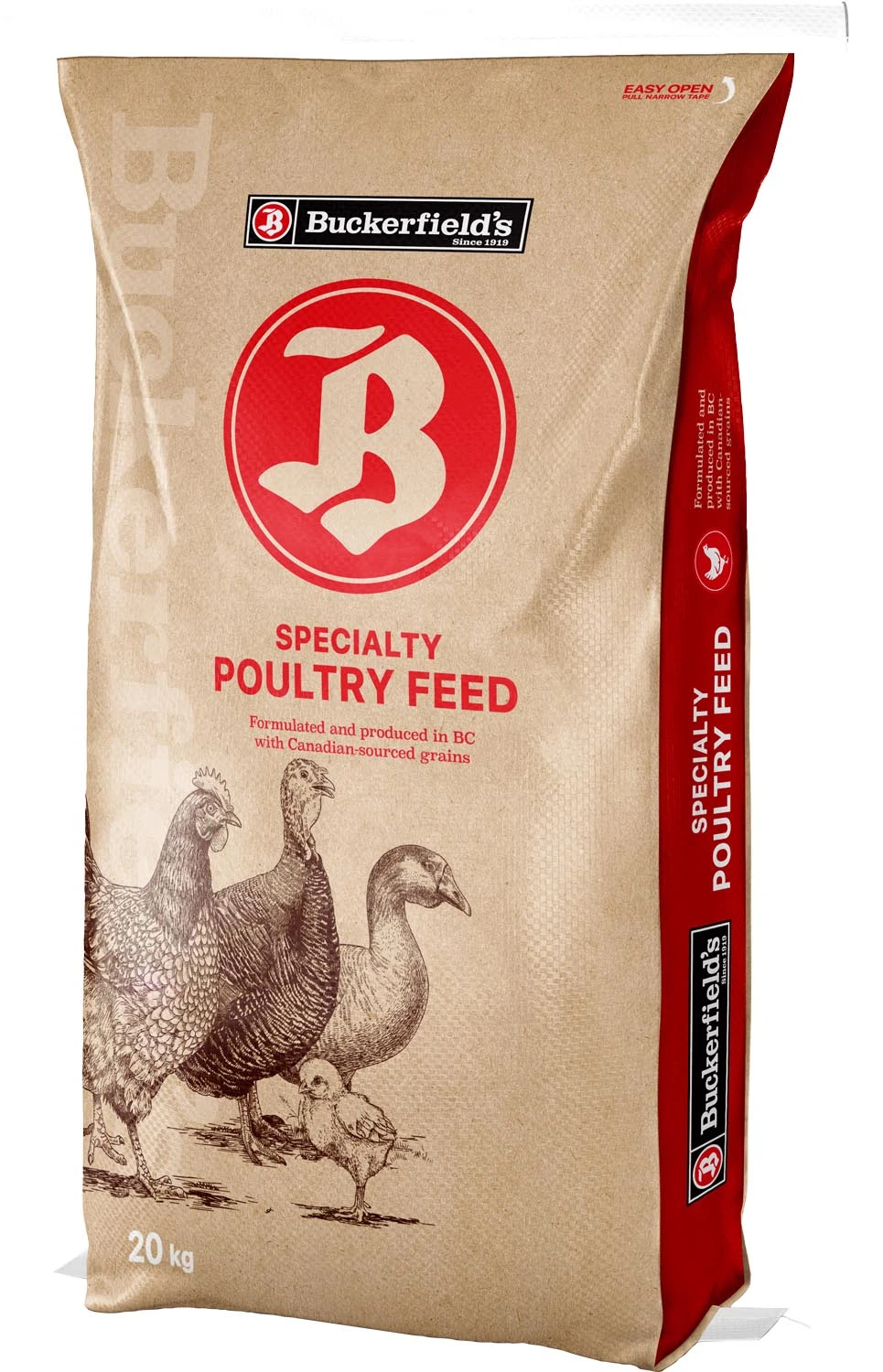
20 kg
Grower crumble for pullets 8–18 weeks. Bridges starter to layer feed.
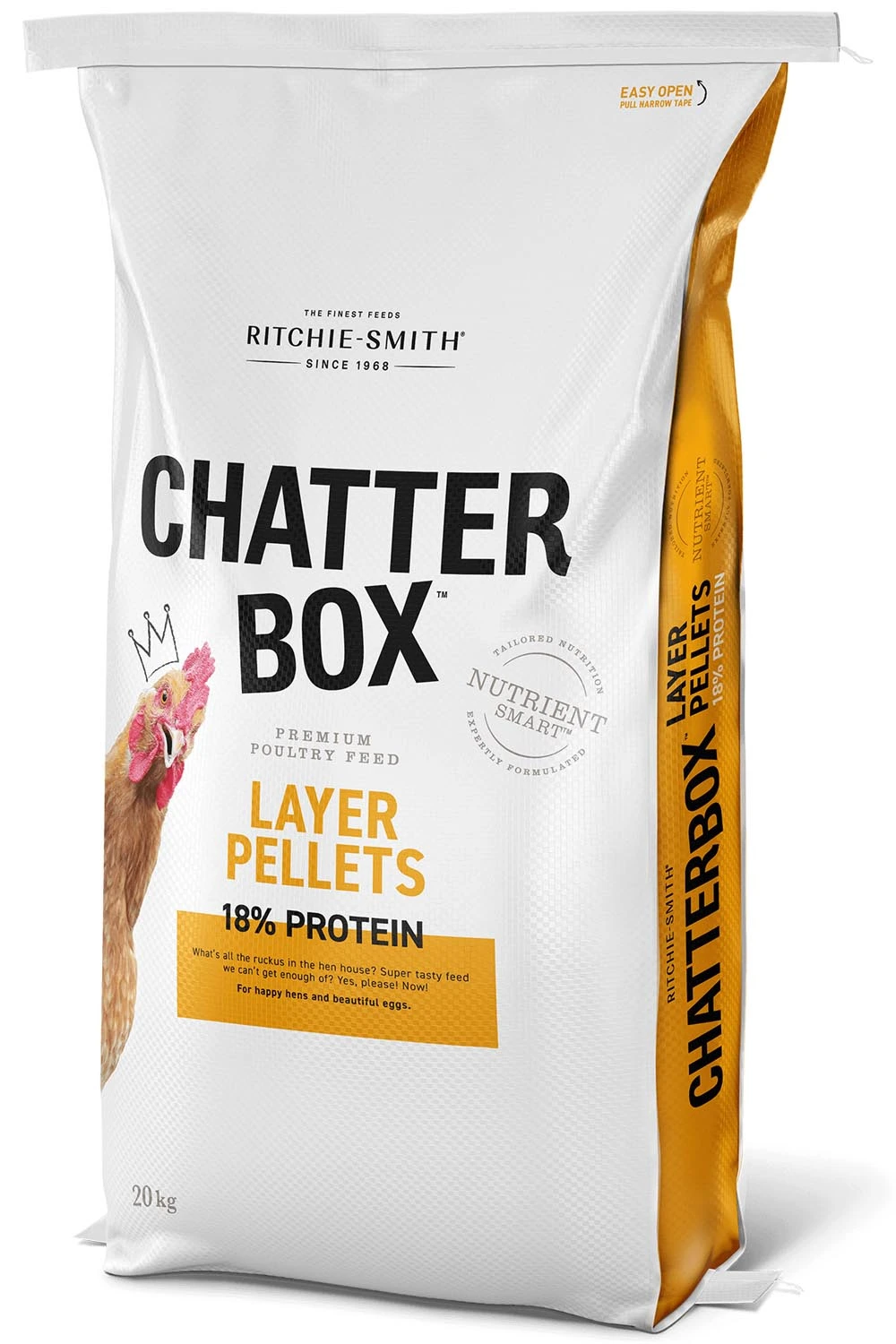
20 kg
Premium 18% protein layer pellet for high-production flocks. BC milled.
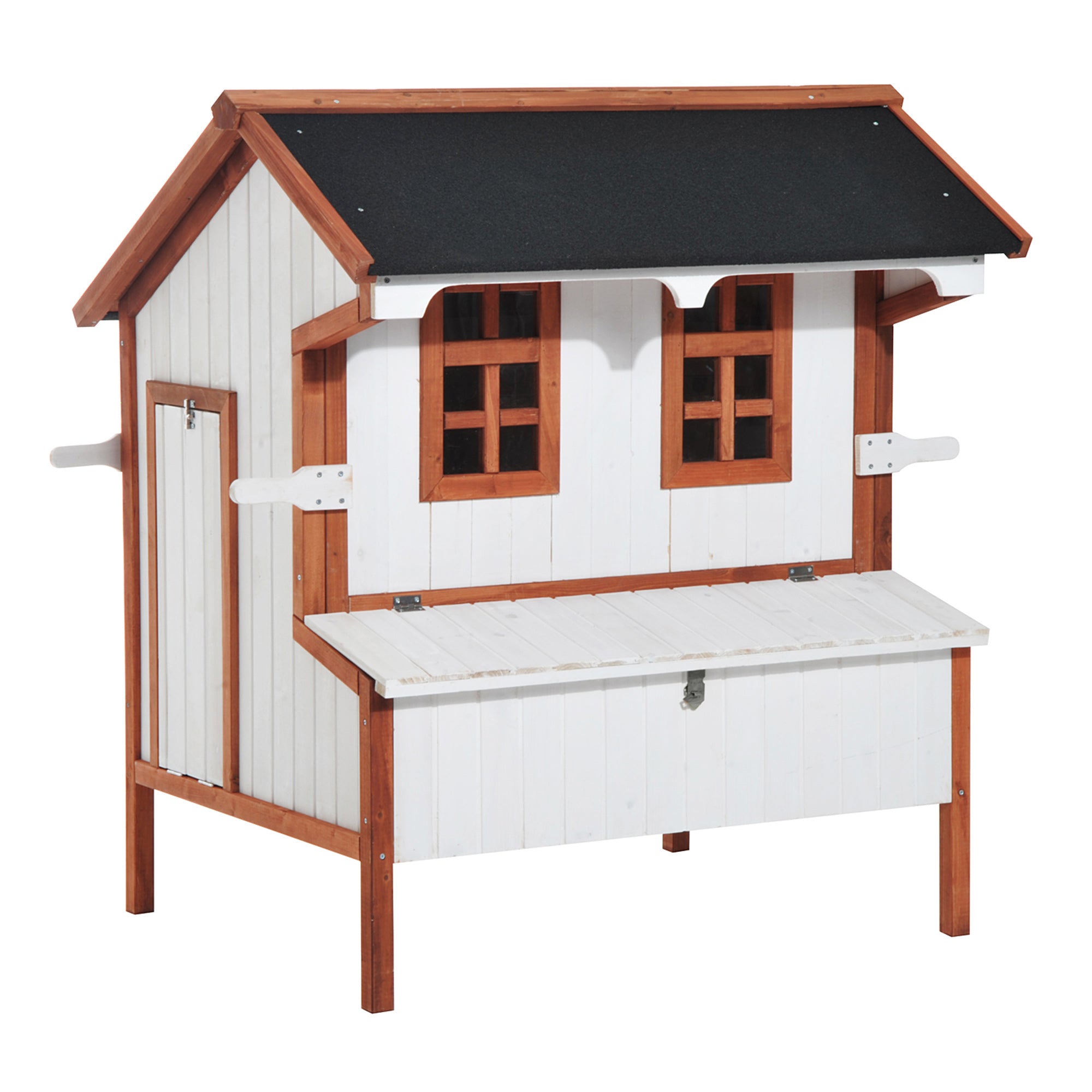
110 × 85 × 109 cm
Raised cottage-style wooden hutch with nesting box, opening roof, glass windows, and carry handles.
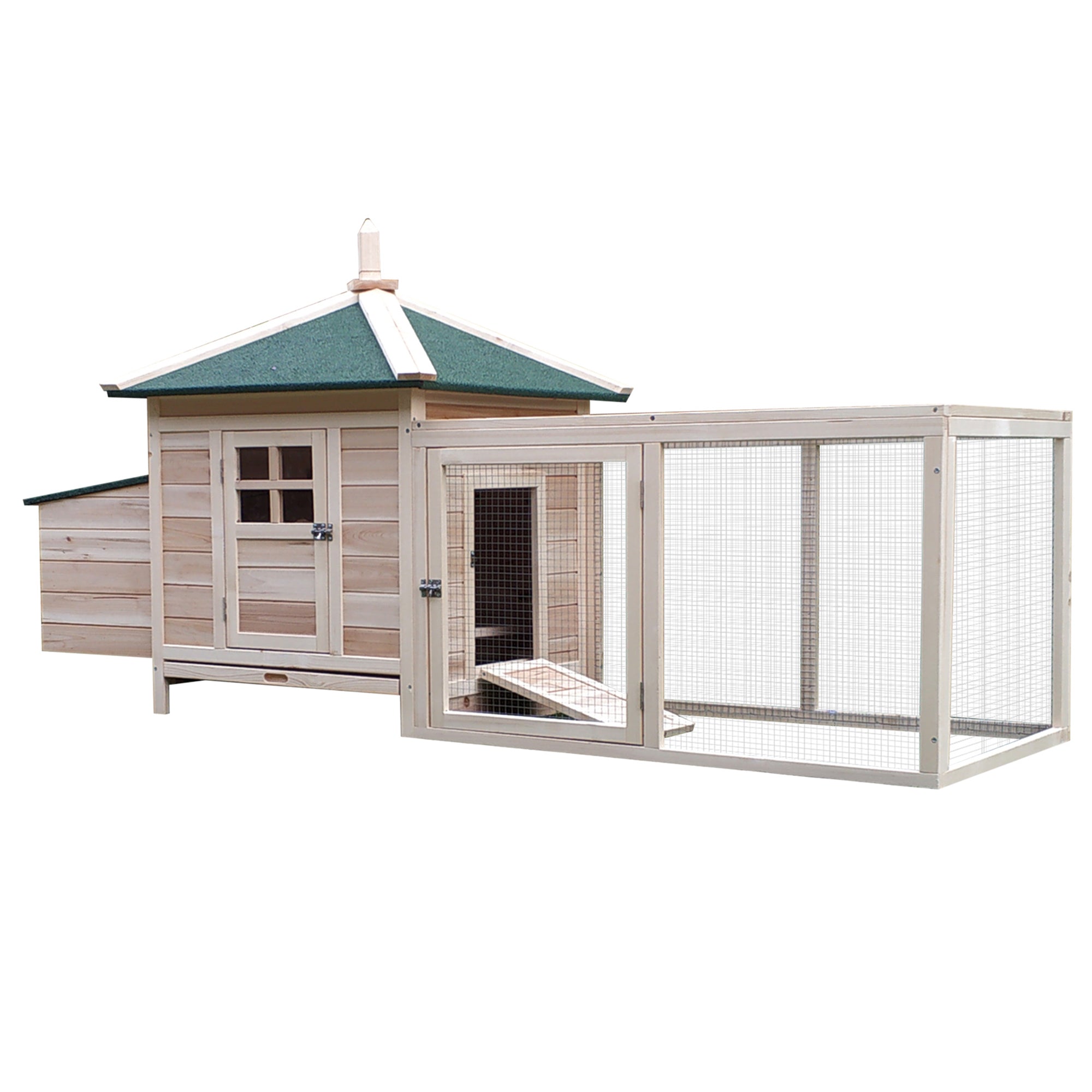
196 × 76 × 97 cm
Enclosed wooden coop house with attached run, built-in nesting box, ramp, and pull-out tray.
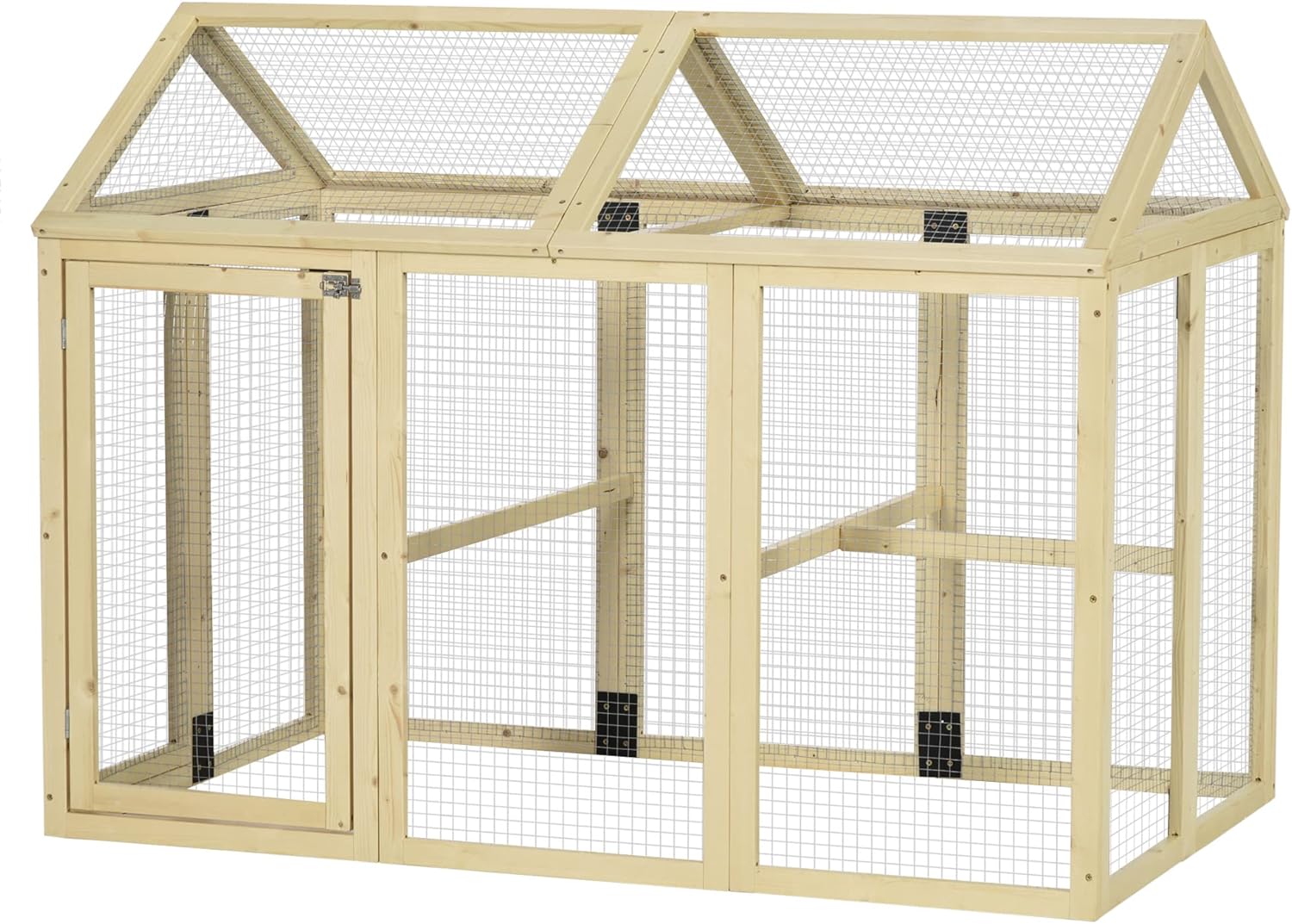
140 × 89 × 106 cm
Compact outdoor chicken run for 1–3 hens. Fir wood frame, 3 perches, 2 access doors.
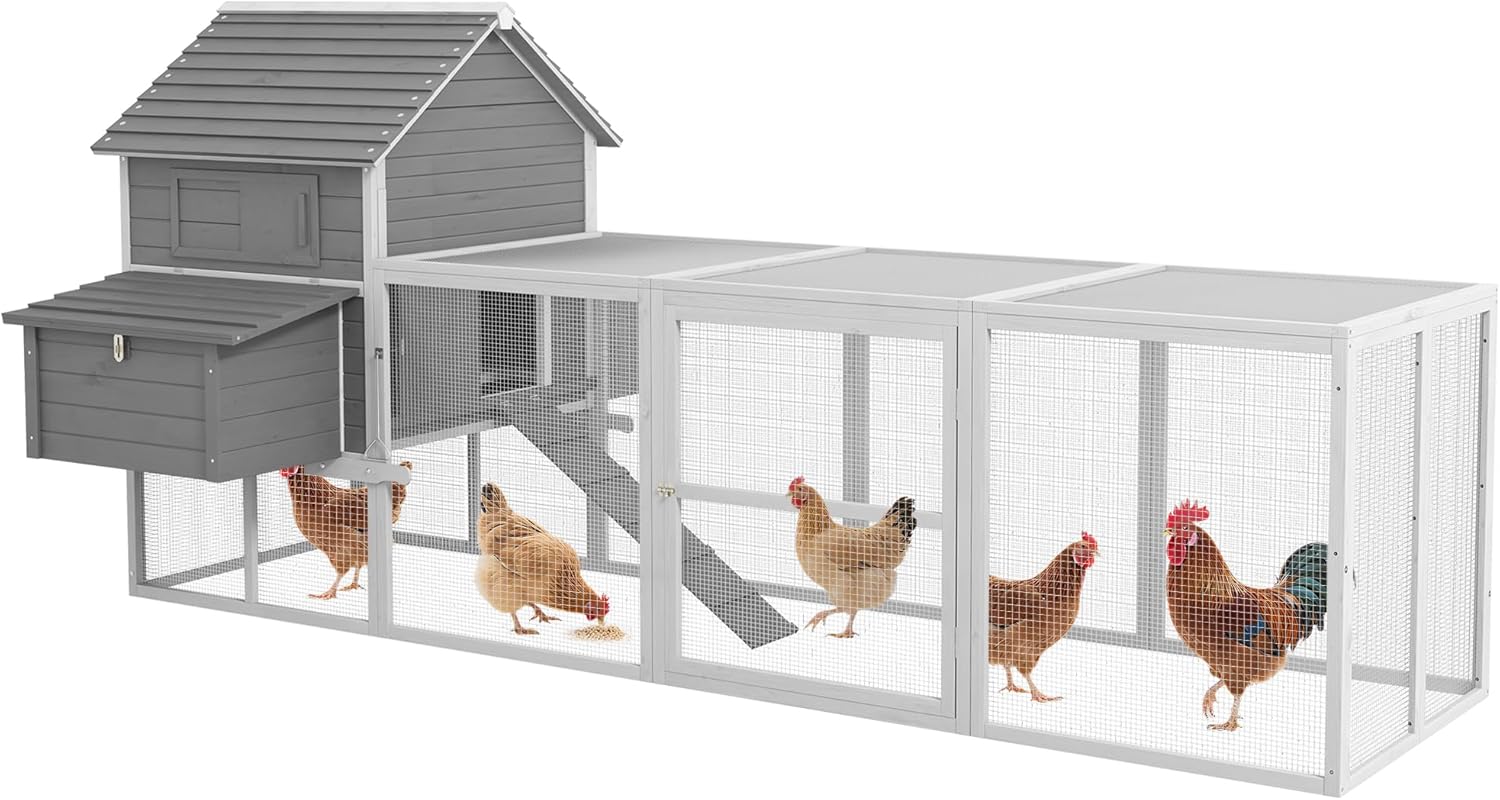
310 × 150 × 149 cm
Full backyard coop with enclosed run, nesting box, ramp, and pull-out tray. Fits 4–6 hens.
Your bag is empty.
Add something good.